NOTE: This message was emailed to Ballad Health team members on Tuesday, Nov. 24.
Dear Colleague,

As we head into Thanksgiving week, it’s fitting that we’re wrapping up our B Thankful skill. Over the past several weeks, we’ve explored how gratitude can become part of the way we work together: creating a culture of gratitude, recognizing that people prefer to receive appreciation in different ways and being intentional about expressing our thanks. Each tip has encouraged us to slow down, notice the people around us, and let them know that who they are and what they contribute are appreciated.
This week, we bring those ideas together by looking at how gratitude can strengthen an entire team.
This week’s tip
Gratitude in a Corporate Environment #4: How Gratitude Enhances Team Collaboration
When teammates feel appreciated for who they are, not just for the work they do, it helps create an environment where people feel comfortable bringing their best selves to work, sharing ideas and information, offering feedback and supporting one another. Gratitude and positivity can also be contagious. As appreciation becomes part of a team’s culture, it can help build the trust and unity that make collaboration easier and teams more supportive.
Here are three principles for using gratitude to strengthen team collaboration:
- Be specific. Go beyond a quick “thanks” or a familiar phrase. Tell someone what you appreciate, why you appreciate it, and the difference it made.
- Make gratitude part of your everyday communication. Appreciation doesn’t have to be saved for a special occasion. Look for natural opportunities to include it in conversations, emails, huddles, meetings and other day-to-day interactions.
- Show gratitude for different perspectives. Thank teammates for speaking up, sharing an idea, asking a question or offering another point of view. Even when perspectives differ, recognizing someone’s willingness to contribute helps reinforce that their voice has value.
Call to Action:
Take an honest look at how often you show appreciation for your teammates. Then, choose one way to weave gratitude more intentionally into your everyday communications.
As we close out the B Thankful skill, remember that gratitude doesn’t have to be grand to make a difference. It starts with paying attention, being specific and making appreciation a regular part of how we communicate with one another. When each of us does that consistently, we help create teams where people feel seen, respected and comfortable contributing their ideas, perspectives and best work. And during Thanksgiving week, it’s a timely reminder that giving thanks is something we can carry with us well beyond the holiday.
Program progress check
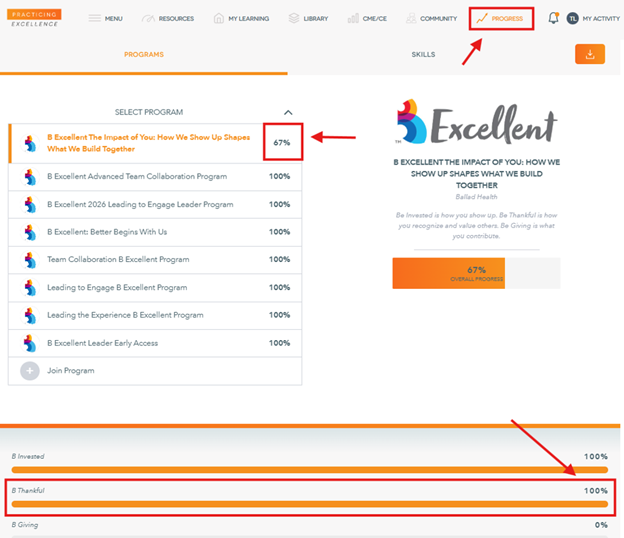
After you complete this week’s tip, you should now see 100% completion of the B Thankful skill in your progress tab. You should also see your Overall Progress in the B Excellent The Impact of You: How We Show Up Shapes What We Build Together program reach 67%.
Take a moment to review your progress and ensure you’re current with the program. Staying up to date with each week’s content helps you get the most from the Learn, Try, Share experience, reinforces the skills you’ve already learned, and prepares you for the next phase of your B Excellent journey.
Team Member Perspective
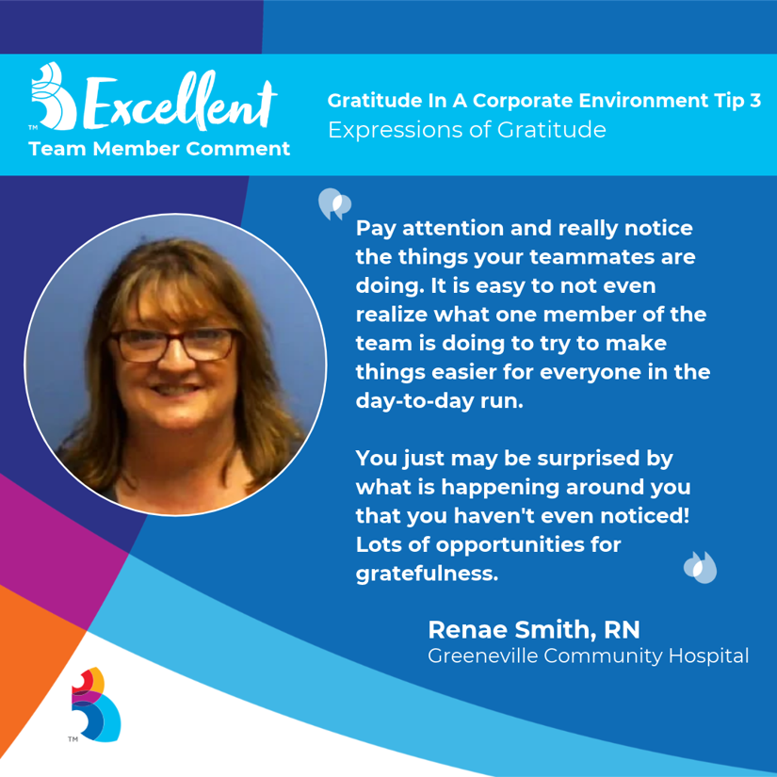
Renae Smith, RN at Greeneville Community Hospital, shared a great observation from last week’s Expressions of Gratitude tip:
“Pay attention and really notice the things your teammates are doing. It is easy to not even realize what one member of the team is doing to try to make things easier for everyone in the day-to-day run. You just may be surprised by what is happening around you that you haven’t even noticed! Lots of opportunities for gratefulness.”
Renae’s perspective is a great way to close out B Thankful because gratitude often begins with simply paying attention. In the pace of our day-to-day work, it can be easy to miss the small things teammates do to support one another. When we make a point to notice those actions, we may find there are more opportunities to say “thank you” than we realized. And the more often we recognize those moments, the more gratitude becomes part of how our teams work together.