


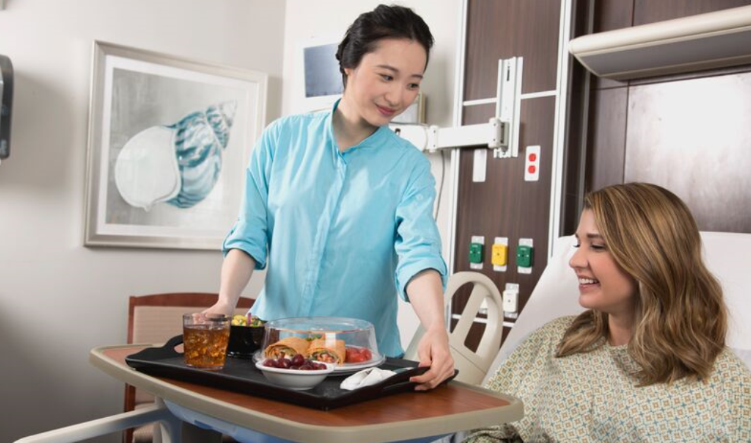
Providing patients with food they enjoy is important — it boosts their satisfaction and helps prevent malnutrition.
Across Ballad Health, hospitals are enhancing the meal options offered to inpatients through a new approach called intentional diet ordering, designed to make hospital stays more comfortable and supportive for patients.
The diet a patient follows while in the hospital is an important part of their care. Obviously, different patient conditions can mean different food requirements – some of the most well-known being restrictions for nutrients like salt or fat.
“The goal is to order the least restrictive diet for the patient, based on their medical and nutritional needs for that admission.” – Lori Upchurch, Morrison Healthcare
But it’s also important to provide patients with food they enjoy, which can improve their satisfaction and help prevent malnutrition. Balancing tasty foods with diet restrictions is always a challenge for food service teams in healthcare.
That’s why Ballad Health and Morrison Healthcare, our food service partner, have implemented intentional diet ordering, which aims at providing patients the least restrictive diet possible, given their health condition. Doing this can improve patient outcomes, patient satisfaction and overall efficiency.
The new program took effect in early October at all Ballad Health hospitals.
“The goal is to order the least restrictive diet for the patient, based on their medical and nutritional needs for that admission,” said Lori Upchurch, MS, RD, LDN, nutrition system director with Morrison Healthcare at Ballad Health. “The changes we’re implementing will make it easier to do so. We aren’t changing the content of the diet, but having only single-nutrient restricted diets allows the provider to individualize the diet for their patients more fully.
“We will still provide the diet that’s needed to treat the patient’s medical condition and meet their nutritional needs. This, along with some recent menu changes, will help optimize our patients’ nutritional status as well as satisfaction.”
Nobody likes to be in the hospital, but when patients are here, the new diet ordering program promises to make their stay a little tastier – and ultimately support better outcomes and higher patient satisfaction.
