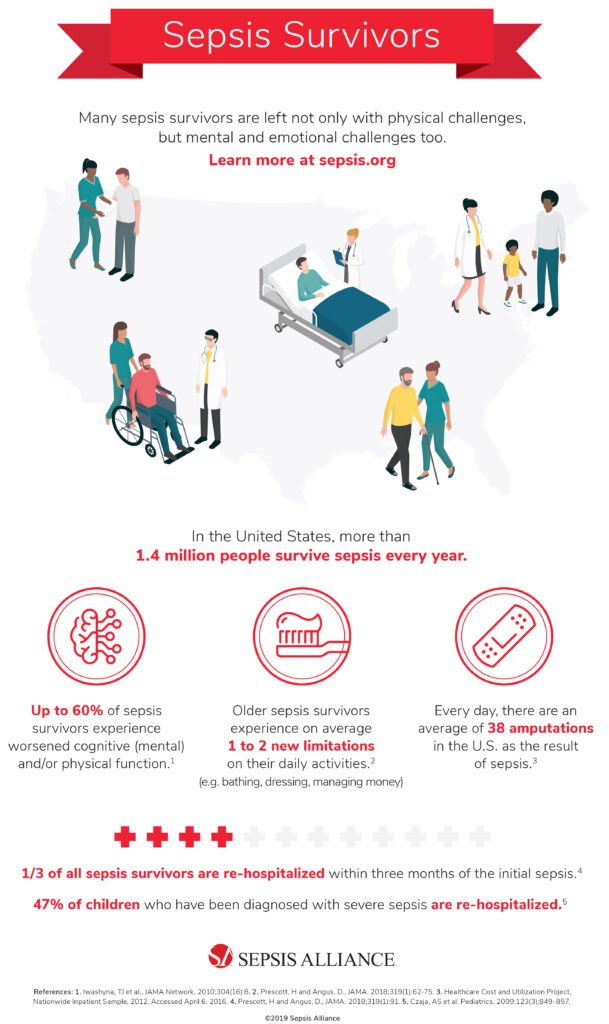
Sepsis is a medical condition that can cause death or serious long-term effects. The impact is so great that we’re putting a special focus on it during September, which is Sepsis Awareness Month.
Caused by the body’s response to infection, sepsis remains a significant healthcare challenge. It is responsible for many deaths in all age ranges – from infants to elderly patients.
Serious cases of sepsis can require a long stay in the hospital, often in the intensive care unit, and then a long recovery period. This can be difficult for the patient, both physically and emotionally, and tough on the person’s caregivers and loved ones.
In a 2023 Sepsis Alliance survivor survey, more than 80% of participants reported ongoing mental, cognitive or physical challenges following sepsis, in many cases affecting their ability to resume their pre-sepsis work schedule.
Recovery from sepsis
Recovery from sepsis is different for every patient and can often take months. Up to half the people who survive sepsis have long-term physical and/or psychological effects, known as post-sepsis syndrome. Symptoms can include difficulty sleeping; experiencing nightmares, hallucinations or panic attacks; depression or loss of self-esteem; difficulty concentrating; and muscle or joint pain. Cognitive problems can show up much later.
One of the most important things post-sepsis patients and their caregivers can do is ask for help. Whether it’s for someone to assist with a few meals or housework, provide transportation or just lend an ear to listen, this can make a big difference – for both the recovering patient and their at-home caregivers.
It can also be helpful to join a local support group or to see a mental health practitioner, preferably someone with experience working with survivors of serious or chronic illnesses.
Ballad Health services
Ballad Health offers a wide range of services that can assist post-sepsis patients, including:
- Home Health – Includes rehab services, social worker, on-call nurses and more, to assist the patient at home.
- Outpatient rehabilitation services – Assists with all types of rehab, offered at over 20 Ballad Health locations.
- Transitional care units – Offering physical, occupational and speech therapy services in a skilled nursing setting, with two free-standing long-term care facilities.
- Palliative care services – Focuses on treating symptoms of an advanced illness and helping the patient reach a better quality of life using an interdisciplinary team to address physical, emotional, spiritual and social needs. These services are available in both inpatient and outpatient settings.
- Behavioral Health – Can assist in addressing both the psychological and emotional wellbeing and coping skills of the patient or caregiver.
- Faith Community Nurse Program – Works with individual faith congregations to help improve health, prevent injury and illness and ease suffering associated with any health crisis.
- Ballad Health Center for Post-COVID Care – The center’s clinical team has advanced knowledge and experience managing symptoms and ruling out underlying diseases that may become present after suffering from COVID-19.
- Madison House – Provides adult day services, short-term care and long-term assisted living in a comfortable, home-like environment, including patients with chronic illnesses.
- Wexford House – Provides short-term and long-term care nursing and rehabilitation services to include physical, occupational and speech therapy services..
Sepsis survivor stories
- Here’s an amazing “Sepsis 911” video, as posted to YouTube by the Sepsis Alliance, which tells the scary — and inspirational — story of a sepsis survivor and quadruple amputee.
- Other sepsis survivor stories – Read these harrowing stories of sepsis survivors, as posted to the Sepsis Alliance website.
Sepsis awareness resources
- Ballad Health sepsis education site – Located on the intranet, our site contains sepsis management tools. It can be accessed by going to the intranet main page > Epic (across top of the page) > Sepsis Management Tools (under Current Projects)
- Sepsis Alliance Summit – Set for Sept. 25-27, this free webinar is hosted by the Sepsis Alliance Institute and offers nursing education CE credits.
- Here’s a link to our previous Ballad Health News articles for Sepsis Awareness Month 2024.
Click here to see the graphic below in PDF format.