Sepsis is a medical condition that can cause death or serious long-term effects. The impact is so great that we’re putting a special focus on it during September, which is Sepsis Awareness Month.
Caused by the body’s response to infection, sepsis remains a significant healthcare challenge. It is responsible for many deaths in all age ranges – from infants to elderly patients.
Serious cases of sepsis can require a long stay in the hospital, often in the intensive care unit, and then a long recovery period. This can be difficult for the patient, both physically and emotionally, and tough on the person’s caregivers and loved ones.
Integrating palliative care into sepsis treatment
There is increasing support for the integration of palliative medicine into sepsis care. For patients facing this serious illness, palliative care offers a holistic approach to pain management and relief from other symptoms – with the aim of honoring the unique values and goals of the patient as care is delivered, thus improving their overall quality of life.
Palliative care can involve nurses and doctors as well as physical and respiratory therapists, pastoral care workers, pharmacists and patient care managers.
Goals-of-care discussions – Sepsis illness can in some unfortunate situations progress quickly to severe sepsis and/or septic shock. These two conditions have potentially life-altering or life-threatening outcomes. One key benefit of palliative care in sepsis management is the inclusion of early goals-of-care discussions with both patientsand their families, enabling them to make informed decisions regarding their care. Addressing goals of care within 72 hours of admission has been suggested to enhance care coordination and improve patient outcomes.
Sooner is better – According to several studies, patients who received palliative care consultation early in their hospitalization showed a trend towards decreased overall hospital length of stay and healthcare costs.
By embracing the principles of palliative care and advancing sepsis research, healthcare providers can improve outcomes and patient satisfaction while providing compassionate care to those facing sepsis.
Recovery from sepsis
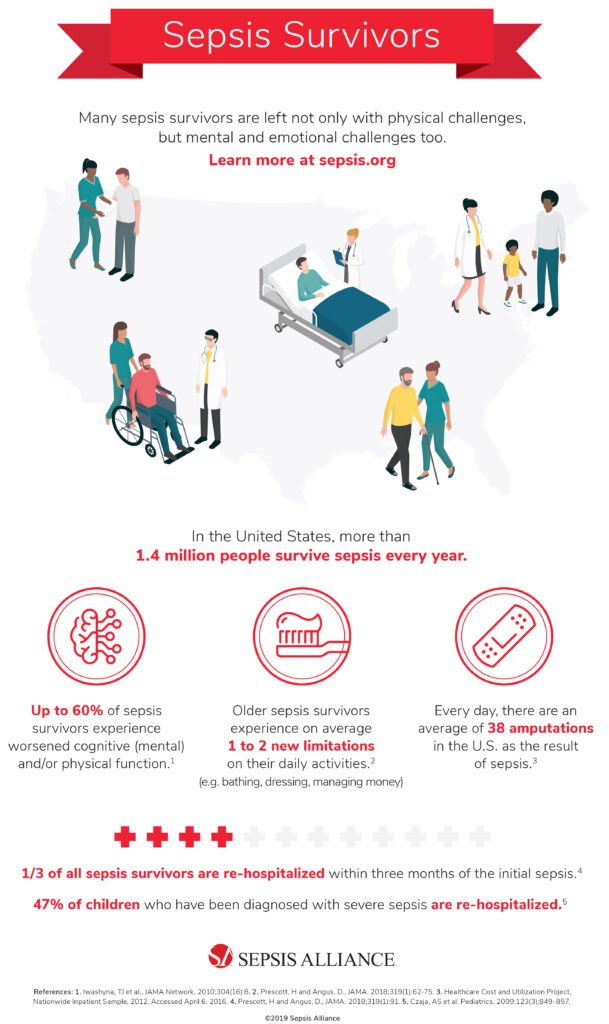
Recovery from sepsis is different for every patient and can often take months. Up to half the people who survive sepsis have long-term physical and/or psychological effects, known as post-sepsis syndrome. Symptoms can include difficulty sleeping; experiencing nightmares, hallucinations or panic attacks; depression or loss of self-esteem; difficulty concentrating; and muscle or joint pain. Cognitive problems can show up much later.
One of the most important things post-sepsis patients and their caregivers can do is ask for help. Whether it’s for someone to assist with a few meals or housework, provide transportation or just lend an ear to listen, this can make a big difference – for both the recovering patient and their at-home caregivers.
It can also be helpful to join a local support group or to see a mental health practitioner, preferably someone with experience working with survivors of serious or chronic illnesses.
For more information on sepsis and post-sepsis treatment, visit the Sepsis Alliance at www.sepsis.org/education.
Click here to see the graphic below in PDF format.