As we recognize Sepsis Awareness Month throughout September, we’ve put together a Q&A from Dr. Lauren Py, emergency room physician and system chair of Ballad Health’s sepsis committee. While it’s our clinical teams who deal with patients who develop sepsis, all Ballad Health team members should be aware of what sepsis is, why it is a critical issue and what part they can play to try to reduce the number of sepsis cases.
Be sure to take a look at the info at the bottom of the Q&A, as well.
Q: What is sepsis and why it is such a critical issue for Ballad Health?
A: Sepsis is a medical emergency and the leading cause of death in hospitals. Sepsis and septic shock arise from the body’s overwhelming response to infection, which can lead to organ failure and even death. It is a critical issue not just for Ballad Health but for all of our community, as awareness and early recognition can save lives. Any type of infection can lead to sepsis, but the potential to develop sepsis increases when the infection is neglected or missed.
Q: What are the signs and symptoms?
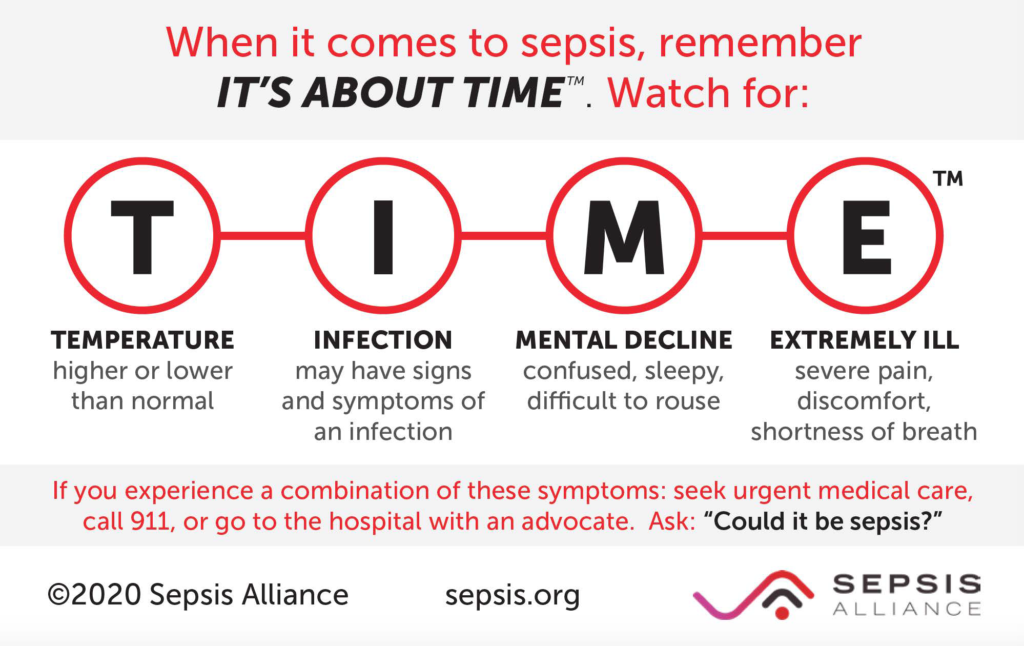
A: There are many signs and symptoms of sepsis. This can make it hard to recognize. It can present as a fever, trouble breathing, a fast heart rate, weakness, confusion, low blood pressure, chills, pain, vomiting, diarrhea, sweaty skin. It can start very mild but can progress very quickly.
Q: Can anyone get sepsis, and is it contagious?
A: Yes. Sepsis can affect anyone, even seemingly healthy individuals. However, it is a greater risk for some more than others. People who are immunocompromised or have a weakened immune system (cancer patients, organ transplant recipients), are unvaccinated, have chronic medical problem or have had recent illness or hospitalization, as well as the really young (up to 1 year old) or older populations (over 65), tend to be more susceptible to sepsis. While the underlying cause of the sepsis may be contagious, sepsis itself is not contagious. For example, you can become septic from bacterial pneumonia or the flu, both of which can be contagious. But sepsis itself is not contagious.
Q: Are there long-term effects from having sepsis, even after you’ve recovered from it?
A: Yes. Even after you recover from sepsis there can be long-term effects. Some potential long-term complications include loss of limbs or tissue, organ failure, chronic oxygen usage or tracheostomy/ventilator, coma, chronic fatigue, decreased physical activity/inability to walk, malnutrition, or depression.
Q: What is most important for our clinical team members to know or do about sepsis?
A: Early recognition and treatment of sepsis can save lives!
Q: Who are the Ballad Health team members who treat patients with sepsis? If a team member is not clinical, is there anything they can do to help?
A: Most people in the hospital have helped treat or take care of sepsis patients at some point. If you are not clinical, the most important thing you can do is look for those signs and symptoms of sepsis and recommend seeking medical attention immediately.
Q: Is there any way to help prevent sepsis?
A: Yes, trying to prevent infections in the first place will help prevent sepsis. This can be done by getting vaccinated against pneumonia, the flu, COVID and other common infections. If you have a wound on your skin, proper treatment and cleaning of the wound can prevent sepsis. Good hand hygiene and mask wearing when taking care of someone with an infection can help prevent the spread of the infection and potentially prevent sepsis in another individual or yourself. Also, it is important to act fast when recognizing an infection to get treatment before sepsis develops.
For those who would like more in-depth, clinical information about sepsis, here are a couple more resources:
- Here’s a video link to Dr. Py’s presentation to residents on “Severe Sepsis and Septic Shock.” This is hosted on Webex.
- Play Septris 2.0, an online learning game, to test your skills while applying a practical approach to early sepsis identification and application of evidence-based management (best practice) and evidence-based guidelines. This game was developed by Stanford Medicine and is available on their website.