NOTE: September is Sepsis Awareness Month. Be on the lookout for more sepsis-related articles each week in Ballad Health News this month, including an interactive quiz.
Many people have heard of sepsis, but misconceptions remain about where it comes from and who is affected.
Some think sepsis only happens in hospitals or only affects older adults and people with serious health conditions. In reality, it can develop from common infections and affect anyone, including people who were previously healthy.
Understanding what sepsis is and recognizing when an infection may be getting worse can help people know when to seek medical care.
Sepsis happens when the body’s response to an infection begins to work against it, causing damage to organs and other tissues. It is not an infection itself. Instead, it is a complication that can develop from infections such as pneumonia, urinary tract infections, skin infections and other illnesses.
One common misconception is that sepsis begins in the hospital. While it can occur in hospitalized patients, many cases start in everyday settings. An infection that seems routine can sometimes become more serious. Most people who develop an infection will never experience sepsis, but it can develop from illnesses that initially may not seem serious.
Another misconception is that the signs of sepsis are always obvious. In reality, early symptoms can resemble those of many common illnesses. Fever, chills, fatigue, weakness, shortness of breath and confusion may occur. In older adults, family members may notice sudden confusion and a decline in everyday functioning before other symptoms appear.
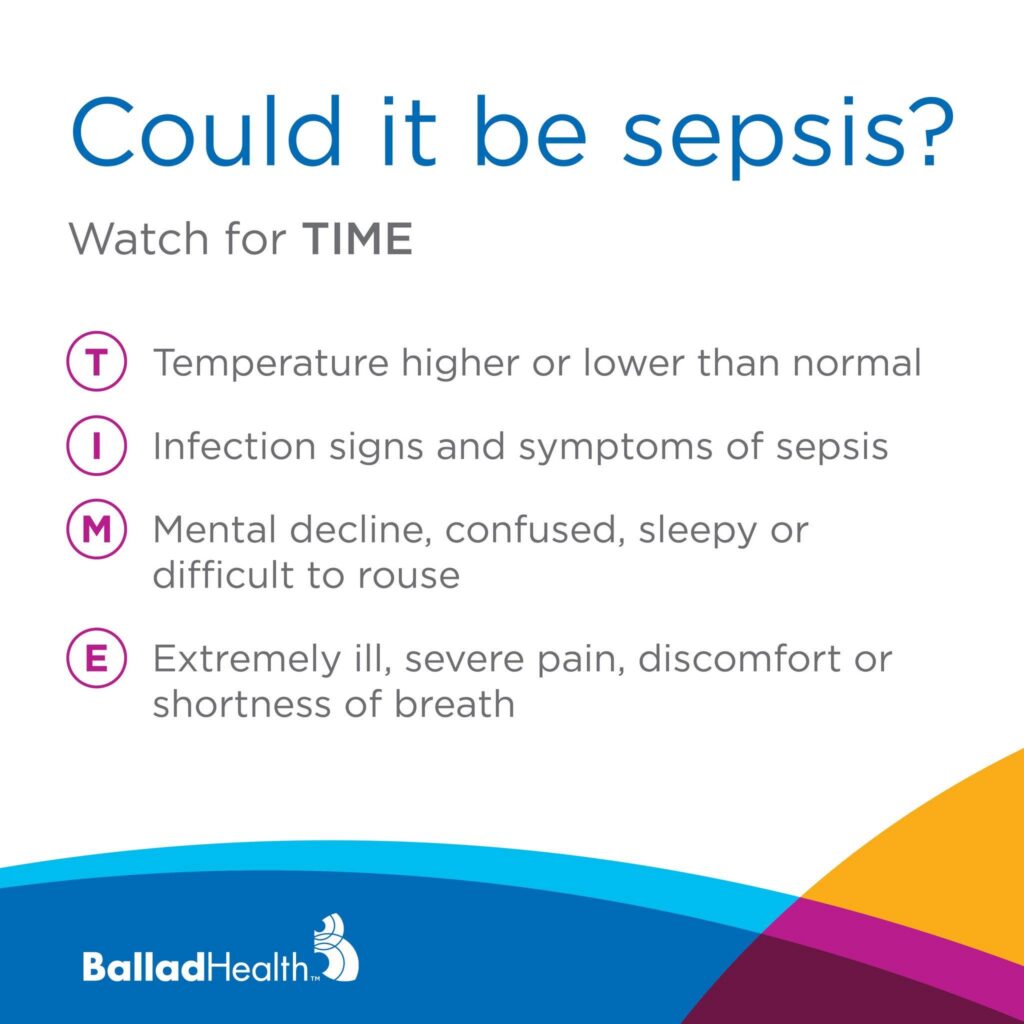
One helpful tool for recognizing possible warning signs is the TIME acronym, developed by Sepsis Alliance:
T – Temperature: Higher or lower than normal
I – Infection: Signs or symptoms of a potential infection
M – Mental decline: Confusion, sleepiness or difficulty rousing
E – Extremely ill: Severe pain, discomfort or shortness of breath
These signs do not automatically mean someone has sepsis, but they can indicate that medical attention may be needed, particularly when an infection is present.
Dr. Lauren Py, emergency physician and chair of Ballad Health’s Sepsis Committee, says one of the most important things people should understand about sepsis is that timing matters. Early recognition gives healthcare teams the best opportunity to identify the source of infection, begin treatment and promote recovery. That’s why paying attention to changes in symptoms and seeking medical care when an infection seems to be worsening can make an important difference.
Sepsis is not limited to older adults. While older adults face a higher risk, sepsis can occur in people of all ages. Infants, people with chronic medical conditions and those with weakened immune systems may be more susceptible, but no single group is exclusively affected.
Many people are surprised to learn that recovery from sepsis may continue long after a patient leaves the hospital. Surviving the initial illness is an important milestone, but some individuals experience lingering effects that can take time to overcome. Fatigue, muscle weakness, difficulty concentrating and mood changes are among the challenges some survivors report during recovery.
The good news is that many people improve steadily with time, support and appropriate follow-up care. Recovery frequently involves support from doctors, nurses, therapists, caregivers and family members. Understanding that recovery can be gradual helps patients and loved ones set realistic expectations and request help.
Some people also assume there is little they can do to reduce their risk. While we can’t prevent every case of sepsis, we can reduce the risk of many associated infections through practical measures. Keeping up to date on recommended vaccinations, practicing good hand hygiene, caring for wounds properly and seeking medical care when an infection seems to be worsening are all important steps.
Sepsis awareness doesn’t need to be fear-based. Understanding how sepsis can develop, watching for signs that an infection may be getting worse and knowing when to seek care can help people respond sooner. During Sepsis Awareness Month, that knowledge is an important step toward earlier treatment and better outcomes.